
 EN
EN
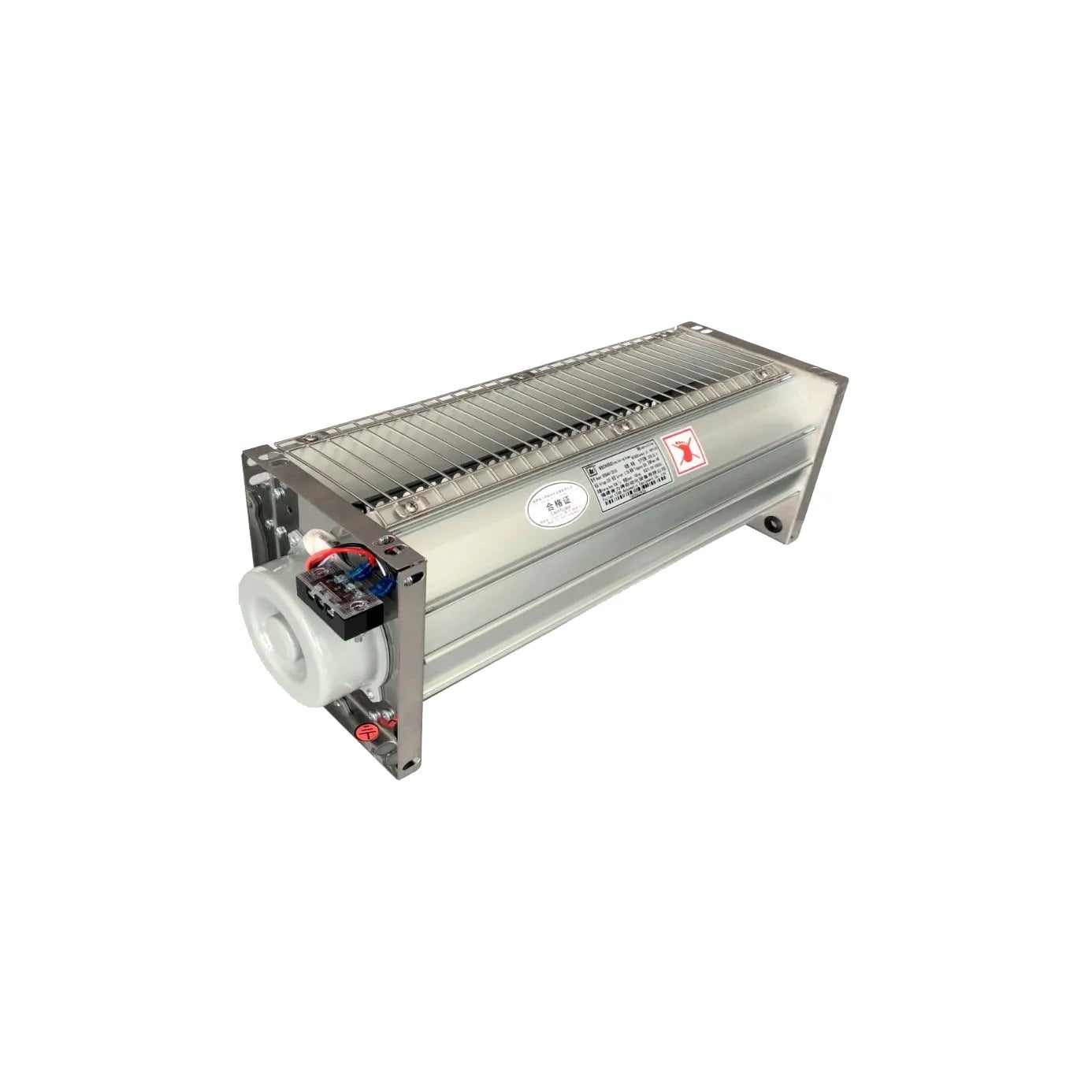
From Core to Casing: The Complete Manufacturing Process of Dry-Type Transformers and Cooling Fans
Published by: Shanghai Angeda
Introduction
For buyers of power distribution equipment, the question is never just "what does it cost?" — it is "how was it built, and will it still be running reliably in ten years?"
At Shanghai Angeda, we specialize in two products that work together on the factory floor and in the field: dry-type transformers and dry-type cooling fans. Every unit we ship passes through a carefully controlled manufacturing process — from raw material inspection to final high-voltage testing. This article takes you inside our workshop, step by step, so you can see exactly what goes into the equipment you buy.
Part 1: How a Dry-Type Transformer Is Made
A dry-type transformer is a safety-first alternative to oil-filled transformers: no oil, no leakage risk, fire-resistant, and maintenance-friendly. It is ideal for commercial buildings, industrial plants, data centers, metro systems, and renewable energy projects. Here is how we build one.
Step 1 — Material Selection and Incoming Inspection
Quality cannot be tested into a product — it must be built in from the very first batch of material. Every production run starts with strict incoming inspection:
Silicon steel (core material):
- we use cold-rolled grain-oriented (CRGO) silicon steel with high magnetic permeability and low core loss, precisely cut to reduce waste and optimize magnetic performance.
Copper:
- low-voltage windings use high-purity copper foil; high-voltage windings use precision copper conductors. Copper must meet conductivity standards, verified by testing before release to the workshop.
Epoxy resin system:
- casting-grade epoxy resin with carefully controlled filler and hardener ratios, checked for viscosity and curing characteristics.
Insulation:
- aramid and polyester insulation materials with verified dielectric strength.
Only materials that pass incoming QC enter the production line.
Step 2 — Core (Iron Core) Manufacturing
The core is the "skeleton" of the transformer and the heart of its magnetic circuit:
Cutting:
1. silicon steel coils are slit and cut to precise dimensions with burr-free edges — burrs cause inter-lamination shorts and increase losses.
Stacking:
2. laminations are stacked with interleaved, step-lap joints. This reduces no-load loss, excitation current, and operating noise.
Clamping and finishing:
3. the core is clamped with high-strength structures, surface-treated, and fitted with grounding connections to prevent electrostatic buildup.
A well-built core is quiet, low-loss, and dimensionally stable for decades.
Step 3 — Winding Manufacturing
Windings determine the transformer's electrical performance and short-circuit strength:
Low-voltage winding (foil type):
- copper foil is wound with interlayer insulation and end sealing, then the foil ends are TIG-welded for low-resistance, high-current connections. Foil winding gives excellent short-circuit withstand capability.
High-voltage winding (layer type):
- precision layer winding under controlled tension ensures uniform electric field distribution.
Pre-treatment:
- after winding, coils undergo vacuum drying to remove all moisture before encapsulation.
Step 4 — Vacuum Casting (Cast-Resin Encapsulation)
This is the signature process that gives our transformers their "dry-type" identity:
1. The dried winding is placed into a precision mold.
2. Epoxy resin, hardener, and filler are mixed and degassed under vacuum to remove air bubbles.
3. The resin is injected into the mold under vacuum, ensuring complete penetration and zero voids.
4. The coil is cured in temperature-controlled ovens with a staged heating profile for optimal mechanical and electrical properties.
The result is a sealed, self-extinguishing, moisture- and dust-resistant cast coil with high mechanical strength — the reason cast-resin transformers can operate safely indoors with minimal maintenance.
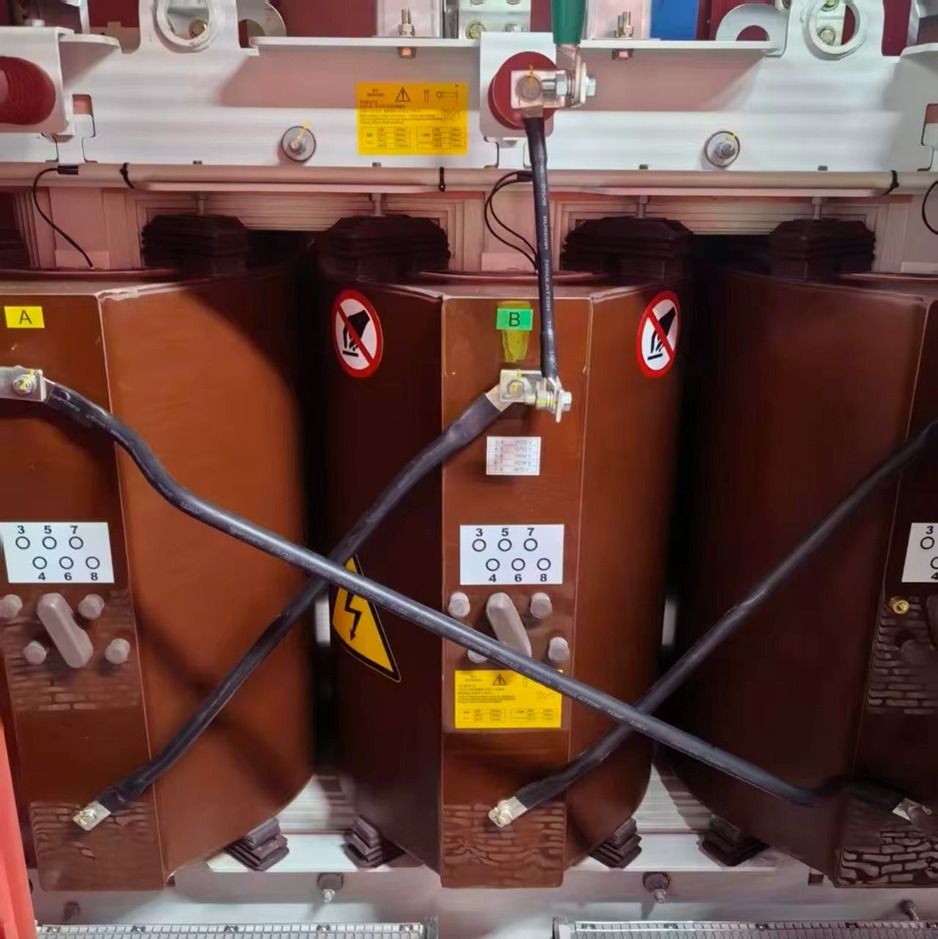
Cast-resin coils after vacuum casting and curing — the heart of every dry-type transformer.
Step 5 — Core–Coil Assembly
The cast coils and core are assembled into a complete magnetic unit:
- Coils are mounted on the core limbs with precise clamping pressure.
- Tap leads, terminal blocks, and connection bars are fitted and torqued to specification.
- Anti-vibration mounting is used to keep noise low in occupied buildings.
Step 6 — Cooling System Integration
Dry-type transformers are naturally air-cooled (AN). For applications with higher load demands, we fit dry-type cooling fans (AF mode) to force air through the cooling ducts, significantly increasing the transformer's continuous output capacity without enlarging the unit. This is where our two product lines meet — the same fans we manufacture separately are integrated into our own transformer packages, or supplied as retrofit kits for existing installations.
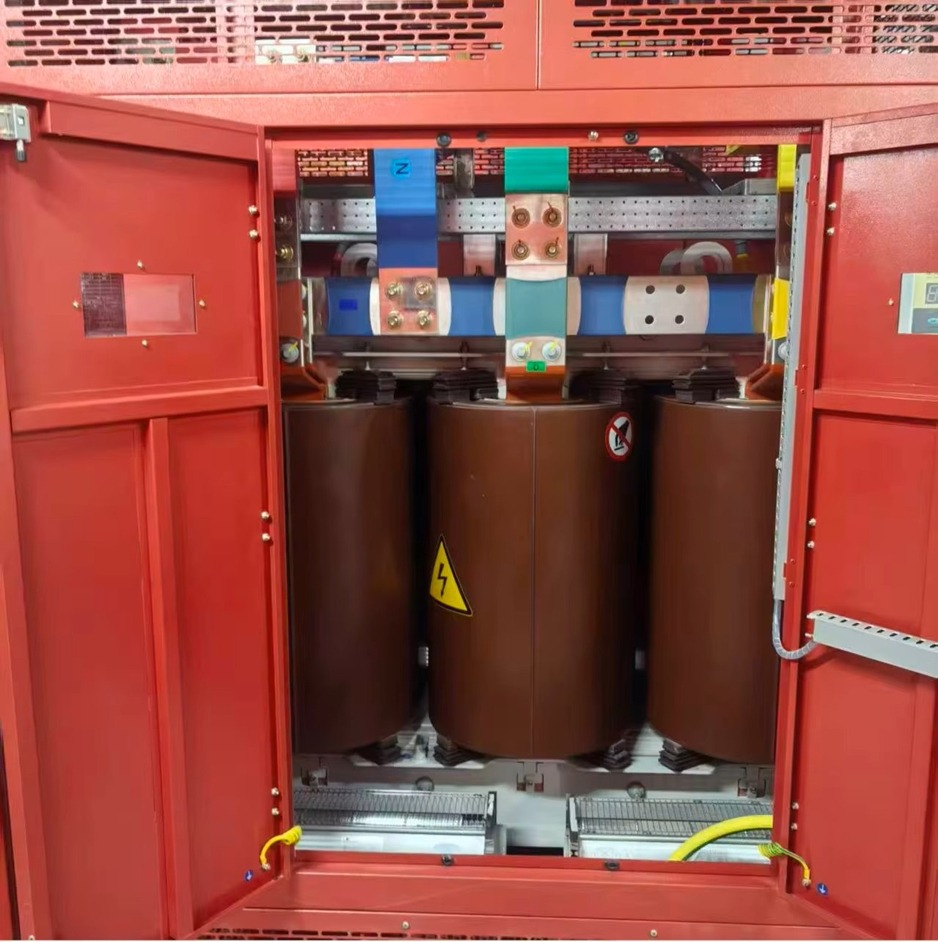
A dry-type transformer in its enclosure, fitted with cooling fans to boost continuous output.
Step 7 — Electrical Testing (The Gate Every Unit Must Pass)
No transformer leaves our factory without a complete test record. Testing is performed in accordance with IEC 60076-11 (the international standard for dry-type power transformers), including:
- Winding resistance measurement
- Voltage ratio and vector group verification
- No-load loss and no-load current measurement
- Load loss and impedance voltage measurement
- Induced overvoltage withstand test
Partial discharge (PD) measurement
- — a key indicator of insulation quality in cast-resin transformers
- Temperature rise test (verifies cooling performance, including AF fan-cooled operation)
Each unit ships with its own test report, so your incoming inspection team can verify performance against our factory data.
Step 8 — Final Inspection and Export Packaging
Before shipping: visual inspection, nameplate verification, accessory checklist, and moisture-protective packaging designed for long sea freight. Units are braced to survive handling and container transport.
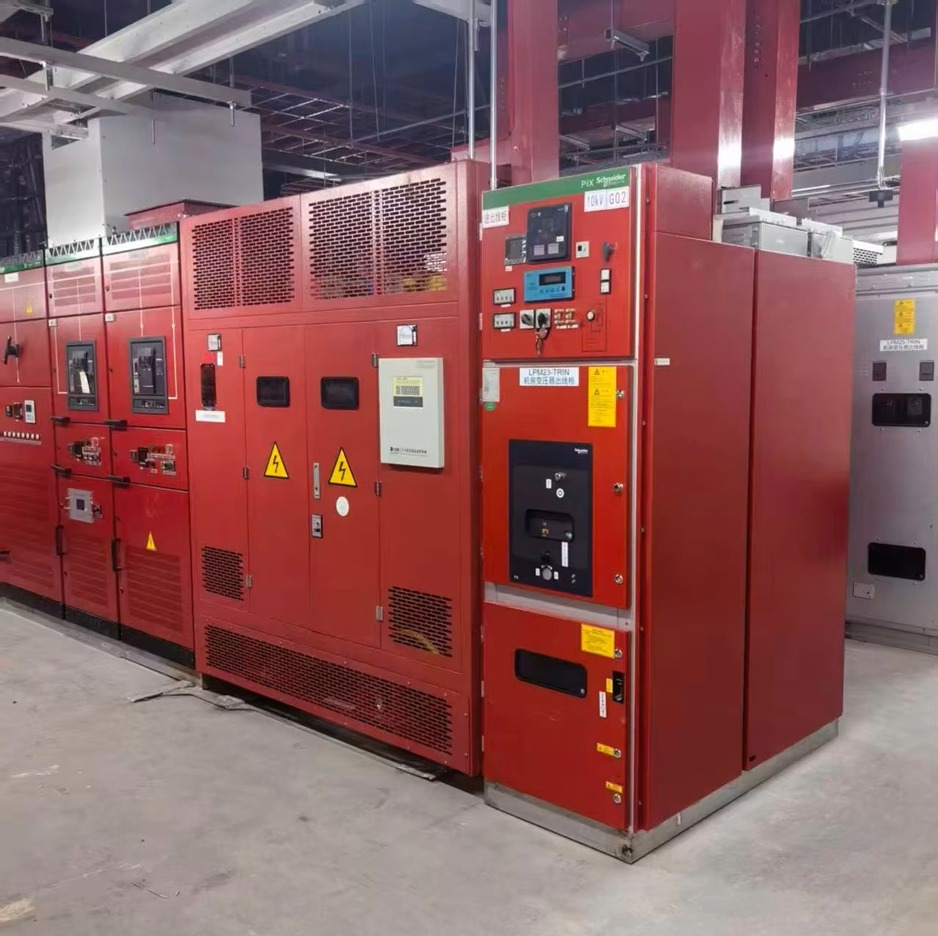
The end of the road — 10 kV switchgear in a power distribution room, the working environment our transformers and cooling fans are built for.
Part 2: How a Dry-Type Cooling Fan Is Made
Dry-type cooling fans are axial fans engineered to blow air across transformer coils and cooling ducts, boosting heat dissipation. Their job looks simple — but reliability depends on precision manufacturing.
Step 1 — Design and Materials
Fan blades are formed from high-strength aluminum alloy, selected for light weight, corrosion resistance, and efficient airflow. Motors are sized for continuous duty with a long design life, and bearings are selected for low maintenance in industrial environments.
Step 2 — Blade Manufacturing and Dynamic Balancing
Blades are die-formed to an aerodynamic profile, then each rotor assembly undergoes dynamic balancing. Even tiny imbalances cause vibration and noise that shorten bearing life — balancing is non-negotiable in our process.
Step 3 — Motor Winding and Insulation Treatment
Motor windings are machine-wound for consistency, then impregnated with insulating varnish (or vacuum pressure impregnated) to seal out moisture and improve heat transfer. Insulation class is matched to the fan's operating environment.
Step 4 — Assembly and Sealing
Motors, blades, and housings are assembled with corrosion-resistant fasteners. The enclosure is sealed to an IP55-style protection class, protecting against dust and water jets — critical for outdoor transformer installations. Mounting frames are designed to bolt directly onto transformer cooling ducts or enclosure panels.
Step 5 — Performance and Endurance Testing
Every fan is tested before it is packed:
- Airflow volume and static pressure verification
- Noise level measurement
- Vibration measurement
- Insulation resistance and dielectric withstand (hi-pot) testing
- Continuous-run endurance testing to confirm thermal stability
Step 6 — Final QC and Packaging
Fans are visually inspected, labeled with electrical ratings, and packed with protective corner bracing for export shipping.
Part 3: Quality Assurance Across the Factory
Two product lines, one quality system:
Full traceability:
- every unit carries batch numbers linking it back to the raw material lots used in production.
In-process inspection gates:
- materials, cores, windings, casting, assembly, and final testing are each checked before moving to the next stage.
Documentation:
- test reports, material certificates, and inspection records are available on request — useful for your own quality audits or end-customer requirements.
Part 4: Working with Us
As a manufacturer, we offer more than standard catalog products:
Customization:
- ratings, voltage combinations, impedance, dimensions, mounting configurations, and fan airflow specifications can be engineered to your project.
OEM/ODM cooperation:
- we can produce to your specification, with your branding and packaging.
Export experience:
- robust sea-freight packaging and complete documentation for international shipments.
Conclusion
Behind every reliable dry-type transformer and cooling fan is a disciplined manufacturing process — careful material selection, precision winding, vacuum casting, dynamic balancing, and — above all — testing that leaves nothing to chance.
If you are planning a project and need a trusted manufacturing partner, we would be happy to discuss your requirements. Send us your specifications — rated capacity, voltage, standards, and target market — and our engineers will respond with a tailored proposal.
Contact Shanghai Angeda — quality transformers and cooling fans, built to last.
Suggested SEO Meta (for your website)
Meta title:
- Dry-Type Transformer Manufacturer | Transformer & Cooling Fan Manufacturing Process — Shanghai Angeda
Meta description:
- Inside our factory: the complete manufacturing process of cast-resin dry-type transformers and dry-type cooling fans — from silicon steel and copper winding to vacuum casting, partial discharge testing, and export packaging.
Target keywords:
- dry type transformer manufacturer, cast resin transformer manufacturing process, dry type transformer cooling fan, transformer axial cooling fan, IEC 60076-11 dry type transformer, OEM dry type transformer supplier
Table of Contents
- From Core to Casing: The Complete Manufacturing Process of Dry-Type Transformers and Cooling Fans
- Introduction
-
Part 1: How a Dry-Type Transformer Is Made
- Step 1 — Material Selection and Incoming Inspection
- Step 2 — Core (Iron Core) Manufacturing
- Step 3 — Winding Manufacturing
- Step 4 — Vacuum Casting (Cast-Resin Encapsulation)
- Step 5 — Core–Coil Assembly
- Step 6 — Cooling System Integration
- Step 7 — Electrical Testing (The Gate Every Unit Must Pass)
- Step 8 — Final Inspection and Export Packaging
- Part 2: How a Dry-Type Cooling Fan Is Made
- Part 3: Quality Assurance Across the Factory
- Part 4: Working with Us
- Conclusion
- Suggested SEO Meta (for your website)