 EN
EN
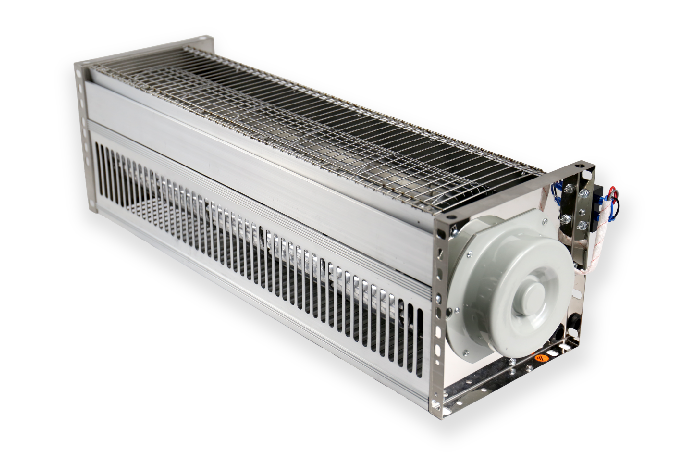
Forced air cooling technology represents a critical advancement in transformer thermal management, where specialized cooling fans provide essential heat dissipation to maintain optimal operating temperatures. Modern power transformers generate substantial heat during operation, necessitating sophisticated cooling systems that can efficiently remove thermal energy and prevent component degradation. The integration of advanced cooling fan technology has revolutionized transformer performance, enabling higher power densities and improved reliability in electrical distribution systems.
Fundamental Principles of Forced Air Cooling in Transformers
Heat Generation Mechanisms in Power Transformers
Power transformers inevitably generate heat through multiple loss mechanisms during electrical energy conversion processes. Core losses, also known as iron losses, occur due to hysteresis and eddy current effects within the magnetic core material. These losses remain relatively constant regardless of load conditions and contribute significantly to the overall thermal load. Copper losses, conversely, vary with the square of the load current and represent resistive heating in the primary and secondary windings.
Additional heat sources include stray losses from magnetic flux leakage and dielectric losses in insulating materials. The cumulative effect of these thermal sources creates temperature gradients throughout the transformer structure, with hotspots typically occurring in winding conductors and core laminations. Understanding these heat generation patterns is essential for designing effective forced air cooling systems that can address specific thermal challenges.
Convective Heat Transfer Principles
Forced convection represents the primary heat transfer mechanism in air-cooled transformer systems, where mechanical fans create controlled airflow patterns across heated surfaces. The effectiveness of convective heat transfer depends on several critical factors, including air velocity, surface area, temperature differential, and fluid properties. Higher air velocities generally enhance heat transfer coefficients, though diminishing returns occur at extremely high flow rates due to turbulence effects.
The relationship between heat transfer rate and cooling fan performance follows established engineering principles, where heat removal capacity increases proportionally with airflow rate and temperature difference. Effective cooling fan design must balance airflow volume, static pressure capability, and energy consumption to achieve optimal thermal performance. Advanced computational fluid dynamics modeling helps engineers optimize fan placement and ducting configurations for maximum heat transfer efficiency.
Structural Design Elements of Transformer Cooling Systems
Fan Configuration and Mounting Systems
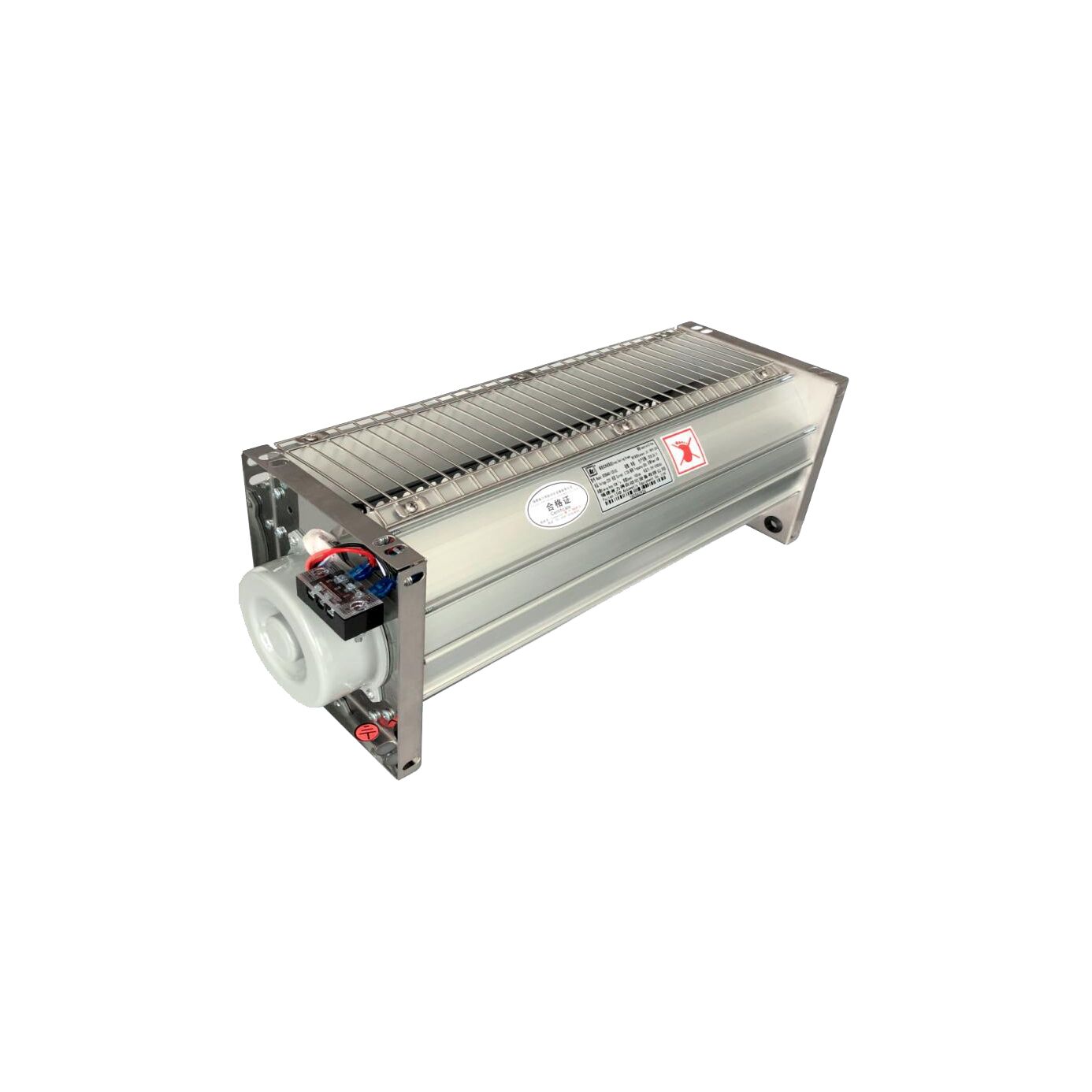
Modern transformer cooling systems employ various fan configurations to achieve optimal airflow distribution and thermal management. Axial flow fans represent the most common choice for transformer applications due to their ability to move large volumes of air at relatively low static pressures. These fans feature blade designs optimized for high efficiency and low noise operation, typically incorporating aerodynamic profiles that minimize turbulence and maximize airflow uniformity.
Mounting systems for transformer cooling fans must accommodate thermal expansion, vibration isolation, and maintenance accessibility while ensuring reliable mechanical attachment. Adjustable mounting brackets allow for precise fan positioning relative to heat exchanger surfaces, enabling optimization of airflow patterns for specific transformer geometries. Vibration damping elements prevent mechanical stress transmission between rotating fan assemblies and static transformer structures.
Ducting and Airflow Management
Effective ducting systems guide conditioned airflow through transformer cooling circuits while minimizing pressure losses and maintaining uniform distribution. Inlet ducting typically incorporates filtration elements to prevent contamination from environmental particulates that could compromise insulation integrity. Smooth transitions and properly sized cross-sections reduce turbulence and pressure drops that would otherwise diminish cooling fan performance.
Strategic placement of flow straighteners and turning vanes helps maintain laminar airflow characteristics through complex cooling passages. Exit ducting systems must provide adequate discharge area to prevent back-pressure buildup that could reduce overall system efficiency. Some advanced designs incorporate variable geometry ducting that can be adjusted for seasonal temperature variations or changing load conditions.
Heat Dissipation Efficiency Analysis
Thermal Performance Metrics
Quantifying cooling fan effectiveness requires comprehensive analysis of thermal performance metrics that accurately reflect heat dissipation capabilities under various operating conditions. Temperature rise measurements provide fundamental data for evaluating cooling system performance, typically comparing transformer winding temperatures to ambient conditions. Thermal resistance calculations help engineers understand the relationship between heat generation rates and resulting temperature increases.
Heat transfer coefficients represent critical parameters for assessing forced convection effectiveness, with higher values indicating superior thermal performance. These coefficients depend on airflow characteristics, surface geometry, and fluid properties, requiring careful measurement and analysis for accurate system evaluation. Advanced thermal imaging techniques enable detailed mapping of temperature distributions across transformer surfaces, revealing hotspots and cooling inefficiencies.
Efficiency Optimization Strategies
Maximizing heat dissipation efficiency requires systematic optimization of multiple interrelated factors affecting cooling fan performance and thermal management. Variable speed control systems allow cooling fans to adjust their operating points based on real-time thermal conditions, reducing energy consumption during light load periods while maintaining adequate cooling capacity during peak demand. Smart control algorithms can anticipate thermal loading changes and preemptively adjust cooling capacity.
Surface enhancement techniques, including finned heat exchangers and textured surfaces, significantly increase the effective heat transfer area available for convective cooling. These modifications must be carefully designed to avoid excessive pressure drops that would reduce overall cooling fan efficiency. Regular maintenance protocols ensure optimal performance by preventing dust accumulation and mechanical degradation that could compromise thermal effectiveness.
Advanced Control Technologies
Temperature Monitoring and Control Systems
Contemporary transformer cooling systems incorporate sophisticated temperature monitoring networks that provide real-time data on thermal conditions throughout the equipment. Multiple temperature sensors positioned at critical locations continuously measure winding temperatures, oil temperatures, and ambient conditions to enable precise control of cooling fan operation. These monitoring systems typically feature redundant sensors and diagnostic capabilities to ensure reliable operation and early fault detection.
Advanced control algorithms process temperature data and automatically adjust cooling fan speeds to maintain optimal thermal conditions while minimizing energy consumption. Predictive control strategies use historical data and load forecasting to anticipate cooling requirements and prevent temperature excursions. Integration with broader power system management networks enables coordinated operation of multiple transformer cooling systems for improved overall efficiency.
Energy Efficiency and Environmental Considerations
Modern cooling fan designs prioritize energy efficiency to reduce operational costs and environmental impact while maintaining effective thermal management. High-efficiency motor technologies, including permanent magnet synchronous motors and electronically commutated motors, provide superior performance compared to traditional induction motors. These advanced motor designs offer precise speed control, reduced maintenance requirements, and improved reliability over extended operating periods.
Environmental considerations influence cooling fan design through noise reduction requirements and materials selection for harsh operating conditions. Acoustic optimization techniques minimize noise generation through careful blade design, resonance avoidance, and vibration isolation. Corrosion-resistant materials and protective coatings ensure reliable operation in challenging environments while reducing maintenance requirements and extending service life.
FAQ
What factors determine the required capacity of transformer cooling fans?
The required capacity of transformer cooling fans depends on several critical factors including transformer power rating, load characteristics, ambient temperature conditions, and desired operating temperature limits. Heat generation rates increase with transformer loading, requiring proportionally higher cooling capacity to maintain safe operating temperatures. Environmental factors such as altitude, humidity, and seasonal temperature variations also influence cooling requirements and must be considered during system design.
How do variable speed cooling fans improve transformer efficiency?
Variable speed cooling fans optimize transformer efficiency by automatically adjusting their operation based on real-time thermal conditions and loading patterns. During light load periods, fans can operate at reduced speeds, significantly decreasing energy consumption while maintaining adequate cooling capacity. This adaptive control approach minimizes auxiliary power losses associated with cooling systems, improving overall transformer efficiency and reducing operational costs over the equipment lifetime.
What maintenance practices are essential for transformer cooling fan systems?
Essential maintenance practices for transformer cooling fan systems include regular cleaning of fan blades and heat exchanger surfaces to prevent dust accumulation that reduces thermal performance. Periodic inspection of mechanical components such as bearings, mounting hardware, and drive belts helps identify potential failures before they compromise system operation. Temperature sensor calibration and control system testing ensure accurate thermal monitoring and appropriate cooling fan response to changing conditions.
How does forced air cooling compare to other transformer cooling methods?
Forced air cooling offers several advantages compared to natural convection or liquid cooling methods, including lower initial costs, simplified maintenance requirements, and rapid thermal response capabilities. While liquid cooling systems may provide superior heat transfer performance, forced air systems eliminate concerns about fluid leakage, pump reliability, and complex piping installations. The choice between cooling methods depends on specific application requirements, environmental conditions, and economic considerations for each transformer installation.