 EN
EN
Dry-Type Transformers for Renewable Energy: Applications and Selection Trends
Published by: Shanghai Angeda
Introduction
The global energy transition is no longer a distant ambition — it is happening now. Solar photovoltaic (PV) plants, wind farms and utility-scale battery energy storage systems (BESS) are being commissioned at record speed, and every one of them depends on a piece of equipment that is rarely noticed but never optional: the transformer. Transformers step up generation voltage to the medium-voltage (MV) collection network, then step it up again at the substation for transmission to the grid. According to the International Energy Agency, renewable capacity additions have set new records in recent years, with solar PV accounting for the largest share of growth and wind and battery storage expanding rapidly alongside it. Each new gigawatt of clean generation brings with it a chain of transformers — and a decision about which technology to use.
For decades, oil-immersed transformers dominated the market, and they still serve many applications well. But a growing share of new renewable capacity is now being specified with dry-type transformers. This is not a fashion choice: it reflects real engineering, safety and commercial pressures that are unique to solar, wind and storage projects. This article explains why renewable developers are turning to dry-type technology, walks through the main application scenarios, and outlines the selection trends that buyers should watch in the coming years.
Part 1: Why Renewable Projects Are Moving to Dry-Type Transformers
Fire safety comes first
The single most important reason is fire safety. Oil-immersed transformers contain thousands of litres of flammable mineral oil. In a conventional substation, that risk is managed with bunded pits, fire walls and separation distances. But renewable plants do not look like conventional substations. PV panels are spread across open fields where a fire can travel quickly; wind turbine nacelles are enclosed spaces 80 metres above the ground; and battery containers hold hundreds of cells that can release heat and flammable gases in a fault. In every one of these environments, removing the oil eliminates the largest single fire hazard in the electrical chain. Dry-type transformers use solid insulation and air as the cooling medium — there is simply no liquid to leak, ignite or spread a fire.
Environmental and ESG requirements
Financiers, insurers and regulators are applying steadily tighter environmental standards to renewable projects. An oil-filled transformer carries a lifetime risk of leakage — during transport, installation, operation or end-of-life disposal — that can contaminate soil and groundwater and trigger costly remediation. Dry-type transformers eliminate that risk entirely. For project owners reporting ESG metrics, the advantage is tangible: no oil handling, no spill prevention infrastructure, simplified permitting and easier end-of-life recycling. In an industry where sustainability credentials are increasingly tied to financing terms, "oil-free" is becoming a specification, not just a preference.
Lower maintenance burden
Renewable plants are often built in remote or harsh locations — deserts, hilltops, offshore zones — where every maintenance visit is expensive. Oil-immersed transformers demand periodic oil sampling, filtration, level checks and leak inspections. Dry-type transformers need none of that: there is no oil to test, top up or replace. The routine workload is reduced to visual inspection and cleaning, which means lower operating costs over the asset's life and less downtime. For asset owners who manage portfolios of hundreds of plants, this difference scales into significant savings.
Design freedom and a smaller footprint
Finally, dry-type transformers offer design flexibility that suits modern plant layouts. They can be installed indoors, inside containers, on skids or close to load centres — no fire walls, oil pits or clearance zones are required. They are lighter and more compact than equivalent oil-filled units, which matters when space is at a premium inside a BESS container or a turbine nacelle. For EPC contractors, this translates into simpler civil works, faster installation and a smaller project footprint.
Part 2: Solar PV Plants — The Fastest-Growing Application
Solar PV is the workhorse of the energy transition, and it has become the largest single application for dry-type transformers. A typical utility-scale PV plant follows a familiar architecture: strings of panels feed inverters, which convert DC to AC; the AC output is then stepped up by a transformer to the MV collection network — commonly in the 10–35 kV class — and finally boosted again at the substation for transmission. The step-up transformers sit between the inverters and the collection grid, and they run in conditions that suit dry-type technology remarkably well.
PV plants are exposed to direct sunlight for most of the day, and high ambient temperatures are the norm in the sunbelt regions where most capacity is being built. Combined with the additional heat radiating from the panels themselves, the environment around the transformer can be punishing. Cast-resin dry-type transformers handle this duty well: their epoxy-encapsulated windings are resistant to moisture, dust and temperature cycling, and forced-air cooling fans can be added to boost capacity when ambient temperatures run high.
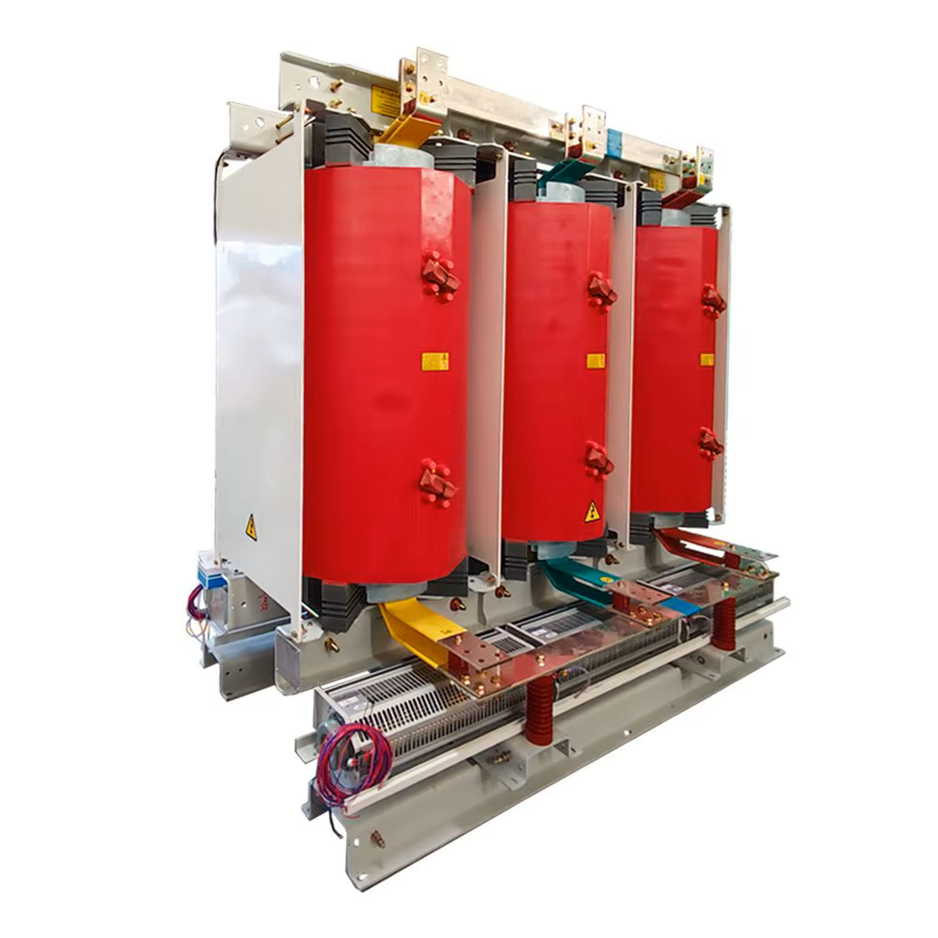
A cast-resin dry-type transformer with forced-air cooling, a common configuration in solar PV step-up stations.
Ratings for these units are typically specified between roughly 1 MVA and 3 MVA, depending on plant block size and the voltage of the collection network. Because a PV plant consists of many identical blocks, developers value repeatability: the same transformer design, procured in volume, with a consistent spares and service strategy. Dry-type units support this well, with predictable performance and long maintenance intervals.
A second trend is the packaged step-up station. To shorten on-site installation time, many developers now order prefabricated skid- or container-mounted substations that integrate the transformer, switchgear and auxiliary equipment, and ship them to site ready to connect. These packaged stations reduce civil works and commissioning effort — a significant advantage on projects where the construction window is tight.
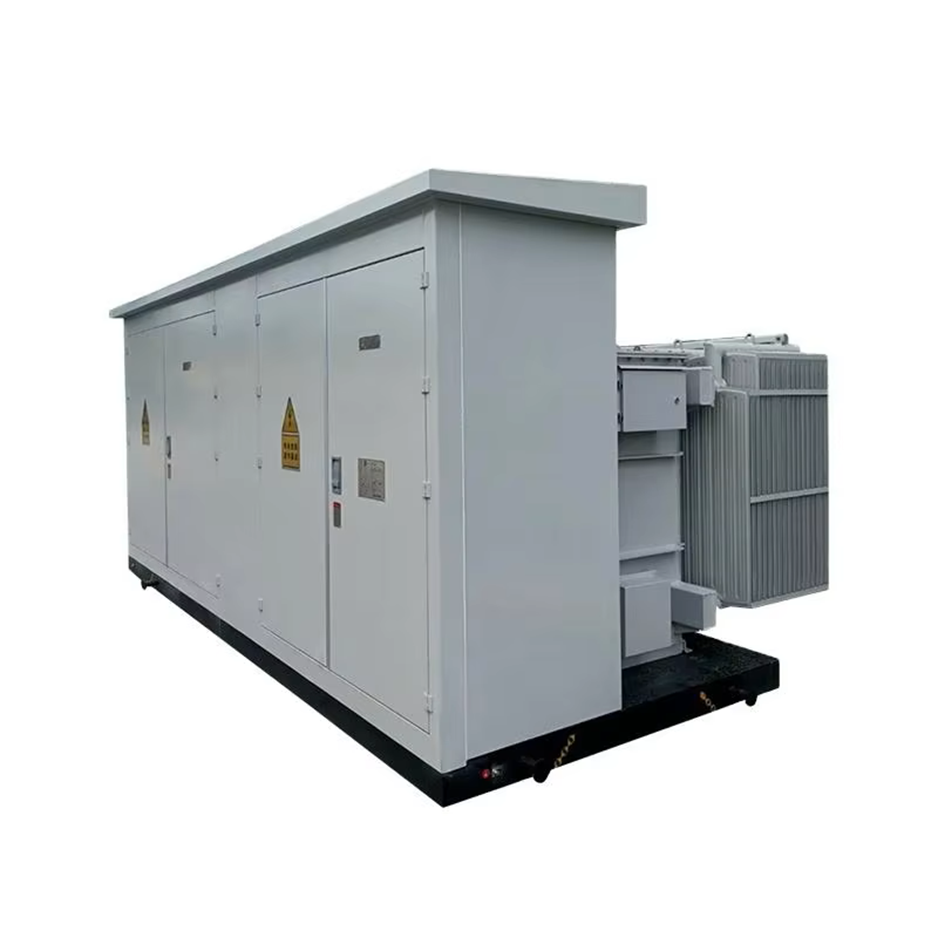
Packaged step-up substations shorten on-site installation time at PV and wind projects.
Part 3: Wind Power — Tough Duty in Tight Spaces
Wind farms present a different set of challenges. In the most common onshore configuration, each turbine is paired with its own transformer — either inside the nacelle or at the tower base — which steps the turbine's output up to the MV collection network. A second, larger transformer at the substation performs the final step-up to transmission voltage. This chain of transformers must survive conditions that no conventional substation equipment ever faces.
The nacelle is the toughest environment. Space is extremely tight, the transformer shares a small enclosure with the gearbox, generator and converter, and the whole assembly vibrates continuously and swings with the yaw of the turbine. Temperature swings can be wide, and in the event of a fault, a fire in a nacelle is extraordinarily difficult to fight — firefighting crews cannot simply climb an 80-metre tower. These constraints make oil-filled transformers impractical: not only is the fire risk unacceptable, but the oil system itself — conservator, radiator, piping — is vulnerable to vibration and difficult to maintain at height. Dry-type transformers, with their solid construction and oil-free design, have become the natural fit.
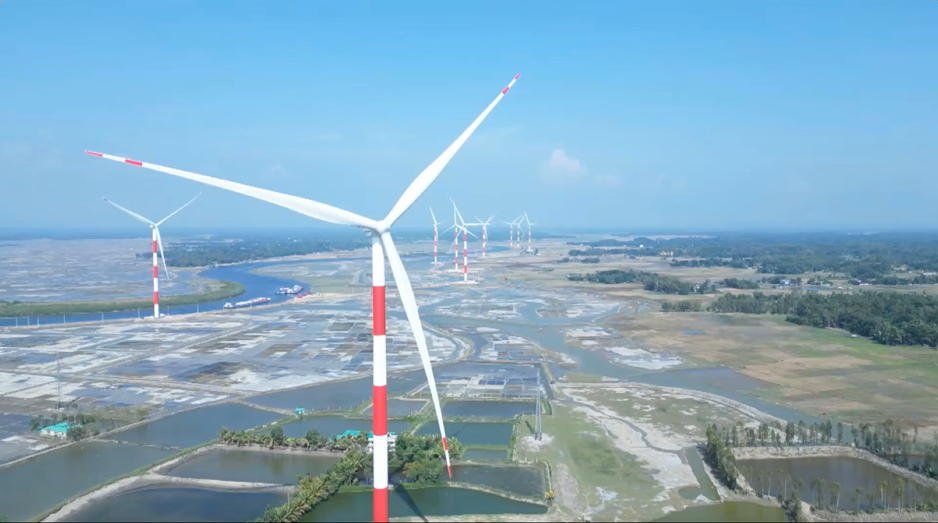
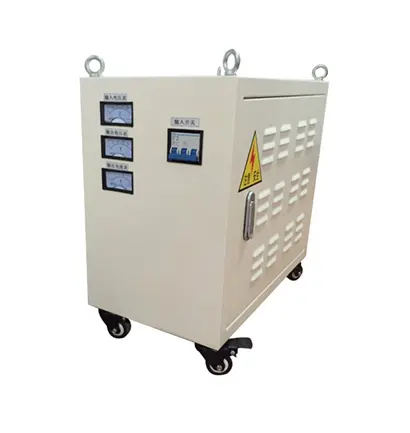
Utility-scale wind farms depend on reliable step-up transformer chains from turbine to grid.
Wind-duty dry-type transformers are engineered for these conditions: compact dimensions to fit the nacelle envelope, reinforced mechanical construction to withstand vibration, and enclosures rated against moisture and salt where the site demands it. Cooling is designed around the turbine's duty cycle — wind output fluctuates constantly, and the transformer must handle repeated load swings without degrading.
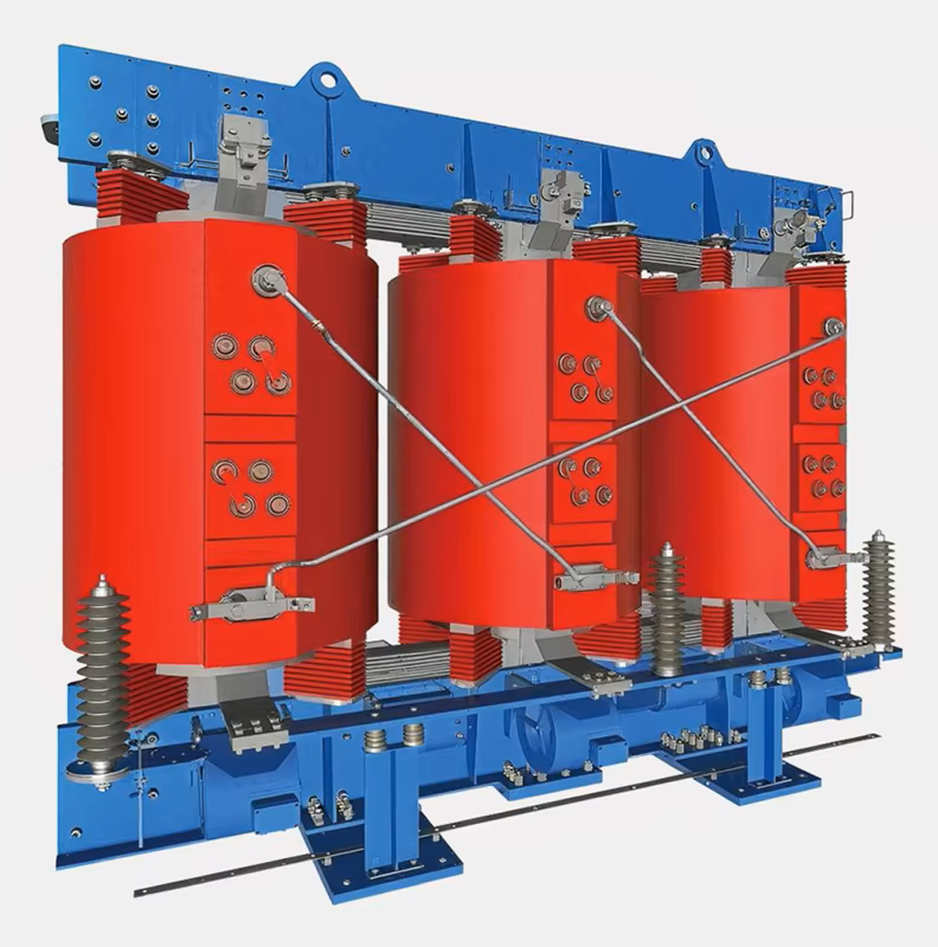
A dry-type transformer built for wind turbine duty, where space, vibration and fire safety all matter.
Offshore wind extends the same logic even further. With nacelles sitting above the sea, maintenance windows are short and expensive, and the consequences of failure — or of fire — are severe. The industry's move toward dry-type and solid-insulation technology in offshore turbines follows the same safety and reliability logic, with the added premium on weight and corrosion resistance.
Part 4: Energy Storage — Safety Becomes the Deciding Factor
Battery energy storage has grown from a niche technology into a mainstream grid asset, absorbing excess renewable generation during the day and releasing it in the evening peak. A utility-scale BESS typically connects to the grid through a power conversion system (PCS) — the inverter stage — followed by a step-up transformer that raises the output to the MV network. Increasingly, these components are being integrated into a single "booster station": a container or skid housing the PCS, the transformer and the associated switchgear, delivered as a complete, factory-tested unit.
Fire safety is the dominant concern in storage design. Lithium-ion batteries carry a thermal runaway risk: under certain fault conditions, cells can release heat and flammable gases in a chain reaction. Regulators and insurers have responded with stricter requirements on spacing, ventilation, detection and fire suppression — and with growing scrutiny of every ignition source in the container. An oil-filled transformer inside or adjacent to a battery enclosure is exactly the kind of risk that project insurers dislike. Dry-type transformers remove it.
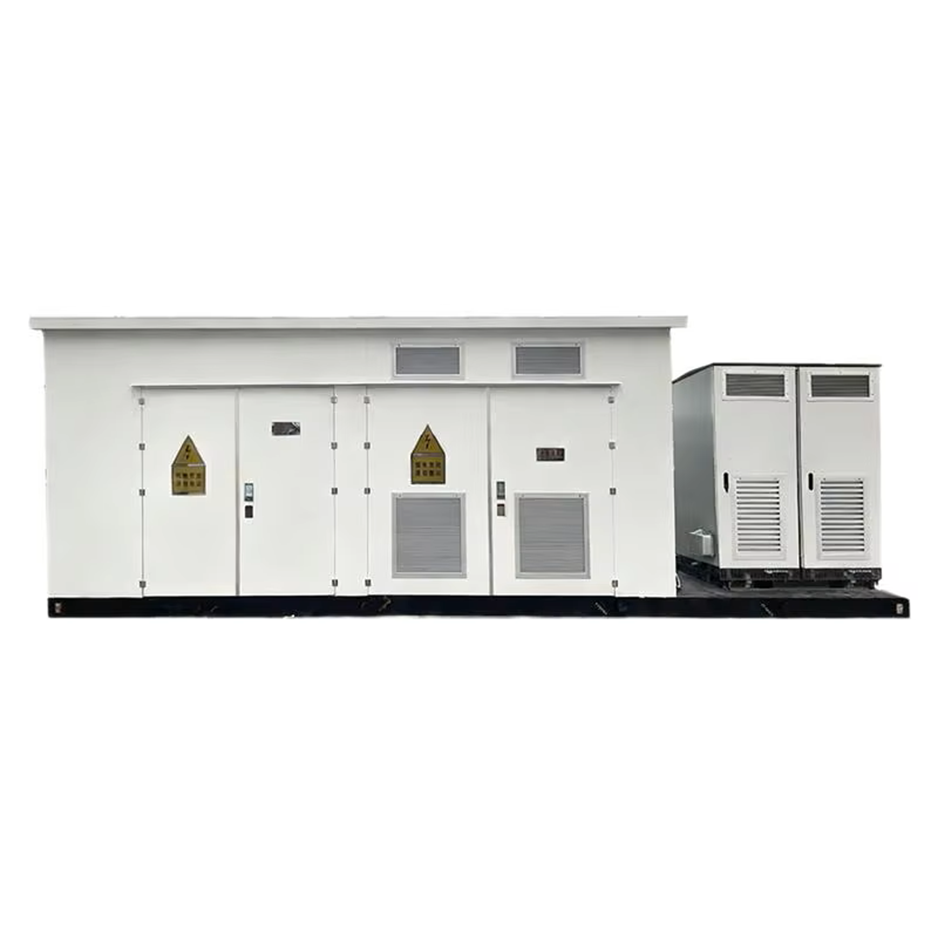
Integrated PCS + dry-type transformer booster units are a growing trend in utility-scale battery storage.
The integrated booster format brings additional benefits beyond safety. Factory assembly and testing shorten on-site installation dramatically; the compact, self-contained design reduces the project footprint; and because the transformer is enclosed in the same container as the PCS, its cooling system must be designed to work in a sealed, ventilated environment — exactly the duty that dry-type transformers with forced-air cooling perform reliably. Low noise is another advantage: dry-type units are quieter than comparable oil-filled transformers, which helps projects meet noise limits at their boundary.
For storage system integrators, the selection criteria are increasingly clear: oil-free, compact, fire-safe, and capable of sustained operation under partial load and rapid cycling — the daily charge–discharge pattern of a BESS. Dry-type technology satisfies all of them.
Part 5: Selection Trends — What Buyers Are Asking For
As renewable projects mature, procurement teams are asking more sophisticated questions. Several trends are shaping how dry-type transformers are specified for the coming years.
Cooling system design. Forced-air cooling (AF rating) is now standard on renewable-duty units, but buyers are looking closely at how it is implemented. Configurations with one fan per phase winding distribute airflow more evenly and keep the windings at more uniform temperatures, extending insulation life; redundant fan arrangements provide backup if one unit fails. Fan quality matters: on a remote PV site, a failed cooling fan is not a minor inconvenience — it is a derating event that cuts revenue until the part is replaced.
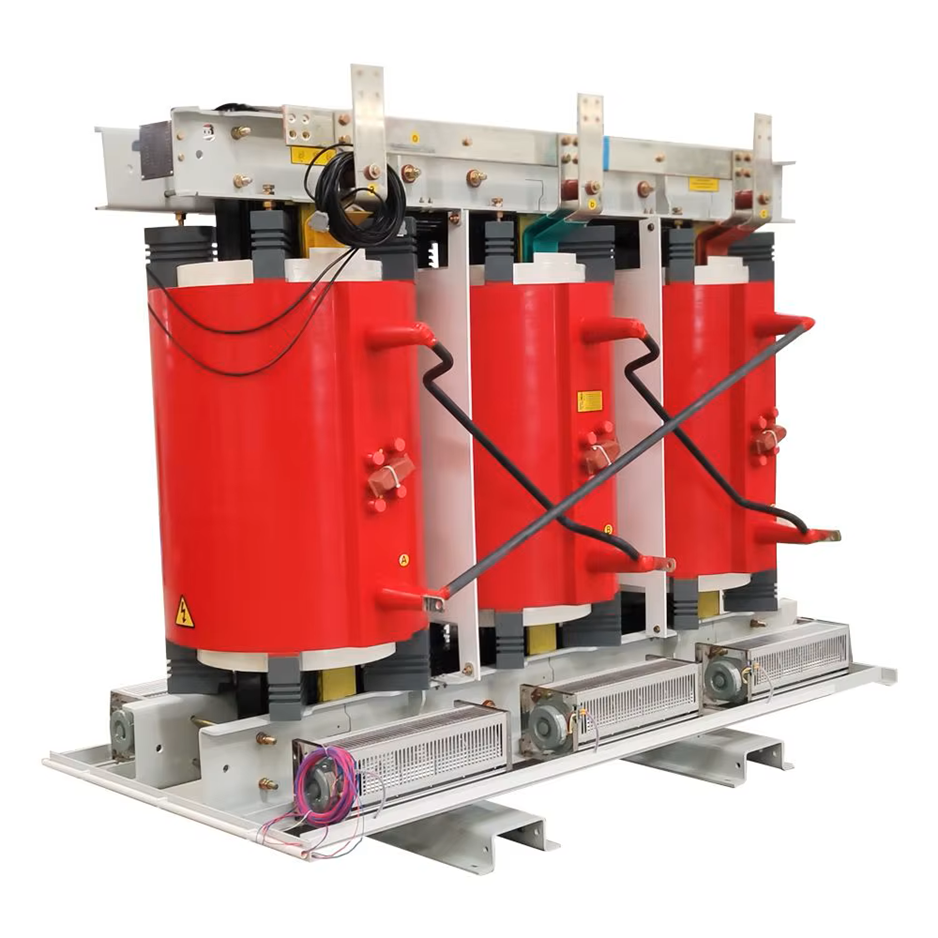
One cooling fan per phase winding enables more even heat removal and longer service life.
Efficiency and loss evaluation. Capitalised-loss analysis — comparing transformer purchase price against the cost of losses over the asset's life — is becoming standard practice in renewable procurement. Buyers increasingly select low-loss designs and, where cost allows, amorphous-core units, because a one-percentage-point improvement in efficiency across thousands of transformers compounds into meaningful portfolio-level savings.
Standards and compliance. International buyers look for compliance with IEC 60076-11 for dry-type transformers, plus the relevant testing and certification for their target market. Documentation, traceability and type-test reports are now routine parts of tender packages.
Enclosure and environmental ratings. Transformers installed outdoors, in containers or in coastal zones need appropriate IP ratings and protection against dust, moisture and salt. The IP class — and the sealing of cable entries and fan housings — is one of the first details experienced buyers check.
Integration and compactness. The industry is consolidating components: PCS + transformer skids, packaged substations, integrated cooling control. Buyers want suppliers who can deliver and support complete, tested assemblies rather than loose components.
Monitoring and smart control. Finally, renewable owners want visibility. Temperature sensors, fan status monitoring and, increasingly, digital interfaces that feed transformer data into the plant's SCADA or asset-management platform are moving from optional extras to standard specifications. A dry-type transformer is the ideal platform for this: its thermal behaviour is well understood, and its sensors are easy to install and maintain without oil-system complications.
Conclusion
The renewable energy build-out has changed the economics and engineering of transformer selection. In solar fields, wind turbine nacelles and battery containers, the arguments for oil-free technology are no longer theoretical — they are written into insurance policies, financing conditions and tender documents. Dry-type transformers answer all of them: they are fire-safe, environmentally clean, low-maintenance, compact and highly adaptable to the harsh, space-constrained environments where renewable equipment lives.
For project developers, EPC contractors and system integrators, the practical takeaway is to treat the transformer as a strategic component rather than a commodity — to specify cooling, efficiency, enclosure and integration carefully, and to work with manufacturers who understand renewable duty. Shanghai Angeda specialises in dry-type transformers and dry-type cooling fans, with engineering experience across PV, wind and storage applications. If you are planning a renewable project and want to discuss transformer selection, cooling system design or packaged substation solutions, we welcome your inquiry — we will be glad to help you choose the right configuration for your site conditions.
Suggested SEO Meta
SEO Title:
- Dry-Type Transformers for Renewable Energy: PV, Wind & Storage Applications
Meta Description:
- Why solar, wind and battery storage projects are choosing dry-type transformers — applications, cooling trends and selection guidance from Shanghai Angeda.
Keywords:
- dry-type transformer, cast resin transformer, solar PV transformer, wind farm transformer, energy storage transformer, BESS booster station, transformer cooling fan
Table of Contents
- Dry-Type Transformers for Renewable Energy: Applications and Selection Trends
- Introduction
- Part 1: Why Renewable Projects Are Moving to Dry-Type Transformers
- Part 2: Solar PV Plants — The Fastest-Growing Application
- Part 3: Wind Power — Tough Duty in Tight Spaces
- Part 4: Energy Storage — Safety Becomes the Deciding Factor
- Part 5: Selection Trends — What Buyers Are Asking For
- Conclusion
- Suggested SEO Meta